

UAE-Oman rail link clears key hurdle as $2.5bn Hafeet Rail advances
Passenger services could cut journeys between Sohar and Abu Dhabi to 100 minutes
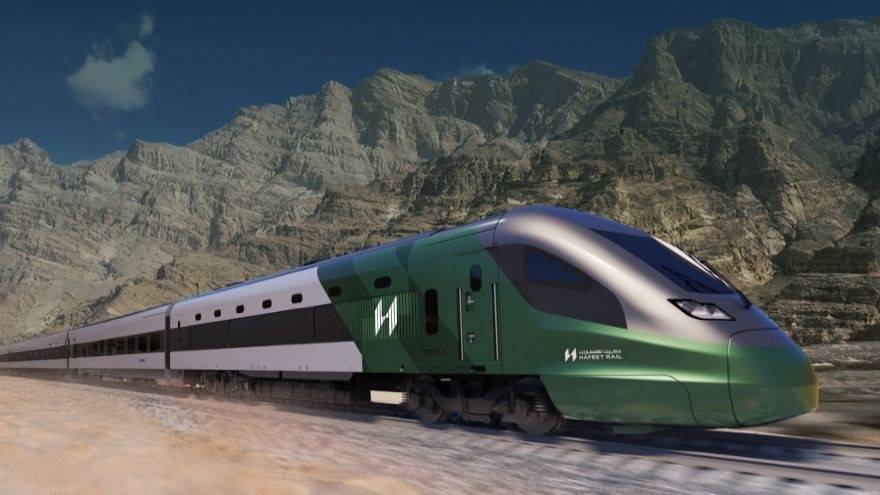
ABU DHABI – Oman has formally ratified an agreement with the UAE to develop a cross-border railway, clearing a key legal step for the $2.5 billion Hafeet Rail project as construction continues on the 238-kilometre network.
The railway will connect the Omani port city of Sohar with the UAE’s national rail network through Al Buraimi and Al Ain, creating a direct rail corridor between the two countries.
The project is being developed for both passenger and freight services, with construction reported to have reached 40 percent.
Hafeet Rail
Oman’s Sultan Haitham bin Tarik ratified the agreement through Royal Decree No. 75/2026, one of 10 Royal Decrees issued on Thursday. The agreement between the governments of Oman and the UAE was signed on June 21, 2026, while the royal decree was issued on September 3 and came into force on the same date.
The ninth decree on the ratification of the agreement between the Government of the Sultanate of Oman and the Government of the United Arab Emirates pertaining to the development of railway linkage.
— Oman News Agency (@ONA_eng) September 3, 2026
The decree formally approves the Agreement on the Development of the Railway Link between the Government of the Sultanate of Oman and the Government of the United Arab Emirates and requires its publication in Oman’s Official Gazette.
من الأعمال الإنشائية إلى ملامح المسار المتكاملة، تتسارع وتيرة الإنجاز على امتداد مشروع حفيت للقطارات.#حفيت_للقطارات
— Hafeet Rail (@hafeetrail) August 24, 2026
From construction works to the development of the full alignment, Hafeet Rail continues to progress, bringing the project’s vision closer to reality.… pic.twitter.com/EaHp6kgrdJ
Hafeet Rail is a joint venture between Etihad Rail, Oman Rail and Mubadala Investment Company. Formerly known as Oman-Etihad Rail, the project took its current name from Jebel Hafeet, the mountain near the Oman-UAE border and along the railway corridor.
The network is planned to stretch 238km, connecting Sohar with the UAE rail system via Al Buraimi and Al Ain. With an estimated investment of $2.5bn, the project has also secured $1.5bn in financing from regional and international banks.
Faster Journeys
Passenger trains on the route are designed to reach speeds of up to 200 kilometres per hour and accommodate between 350 and 400 passengers. Once operational, the journey between Sohar and Abu Dhabi is expected to take around 100 minutes, while travel between Sohar and Al Ain could take approximately 47 minutes.
The railway is also expected to significantly alter freight movement between the two countries. Freight trains will operate at speeds of up to 120km/h, with each train capable of carrying more than 15,000 tonnes of cargo, equivalent to roughly 270 standard containers.
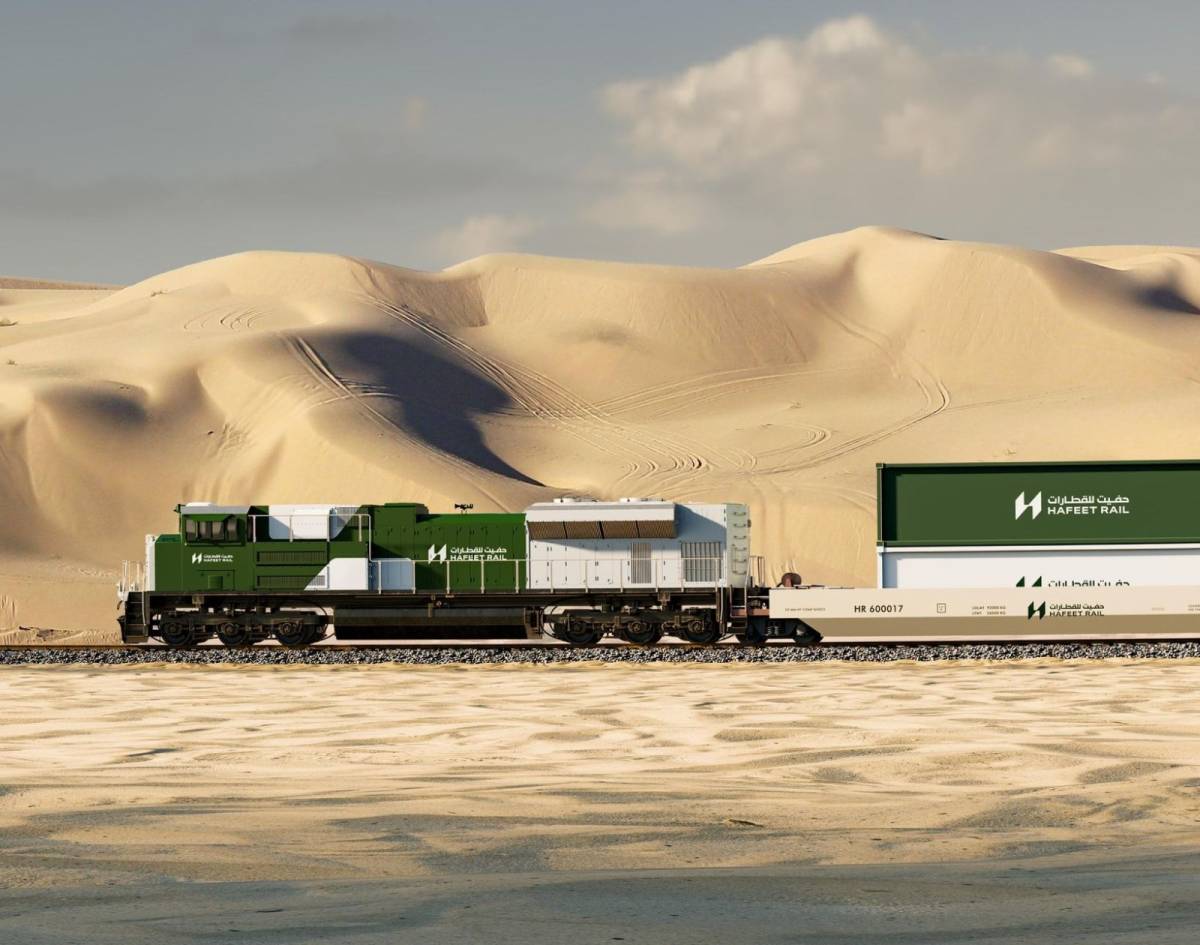
The freight network is intended to support sectors including mining, steel, petrochemicals, agriculture, food, retail and e-commerce. It is also designed to cut freight transit times between Sohar and Abu Dhabi from around five to eight hours by road to approximately 100 minutes by rail.
Construction progress
Hafeet Rail reported that construction had reached 40 percent, with work progressing across Al Ain, Al Buraimi, Sohar and Wadi Al Jizzi.
Building the route involves work across urban and industrial areas, mountainous terrain and deep wadis. Construction has included extensive excavation, bridges, tunnels and flood-protection infrastructure, with more than 27 million cubic metres of earthworks completed by the time the project reached the 40 percent milestone.
أسطول متكامل، صُمم ليحوّل البنية التحتية إلى حركة، ويدعم انسيابية حركة الركاب والبضائع وموثوقية عمليات النقل.
— Hafeet Rail (@hafeetrail) September 4, 2026
اكتشفوا كيف يسهم أسطول حفيت للقطارات في دعم مستقبل النقل والخدمات اللوجستية.#حفيت_للقطارات
An integrated fleet, designed to transform infrastructure into movement,… pic.twitter.com/G7fVo3ryMh
The railway will feature 60 bridges with a combined length of more than 6km, alongside around 2.5km of tunnels and other major structures required to connect the two national networks.
The project entered its implementation phase during Sultan Haitham’s state visit to the UAE in April 2024, when shareholder agreements were signed, major construction contracts were awarded and the joint venture adopted the Hafeet Rail name.